
AmiableWeld® · Exothermic Welding
Exothermic Welding Powder – AmiableWeld®
AmiableWeld® exothermic welding powder produces a molecular joint between conductors, not just a mechanical one. The reaction takes place quickly and safely inside a graphite mold and does not require an external heat or power source.
Learn how Exothermic Welding is done in below Video:
Exothermic Welding Powder
A molecular joint,
not just a mechanical one.
Exothermic Welding powder is also known as exothermic bonding, Thermite Welding, and Thermit Welding. There are many advantages of using Exothermic Welding powder. The most important one is that the process produces a molecular joint and not just a mechanical one in between the conductors. It is produced through a starting reactant which provides enough energy to activate the Welding reaction. This takes place quickly and safely inside a graphite mold.
An Exothermic welding has higher mechanical strength than other forms of welding and excellent corrosion resistance. It is also highly stable when subject to repeated short-circuit pulses, and does not suffer from increased electrical resistance over the lifetime of the installation. However, the process is costly relative to another welding process, requires a supply of replaceable Graphite molds, suffers from a lack of repeatability, and can be impeded by wet conditions or bad weather (when performed outdoors).
Permanent connection
Exothermic welding works when others won’t!.
Exothermic welding is a simple, cost-effective and permanent welded connection that uses a high-temperature exothermic reaction to create a molecular bond. It does not require an external heat or power source. Exothermic welding is the universally preferred method for making permanent copper-to-copper and copper-to-steel electrical connections. Its performance is superior to all existing surface-to-surface mechanical connectors. Exothermic welding works when others won’t!.
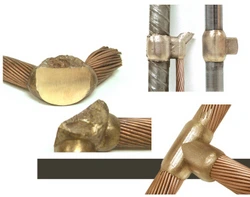
Exothermic welding is usually used for Exothermic Welding copper conductors but is suitable for Exothermic welding a wide range of metals, including stainless steel, cast iron, common steel, brass, bronze, and Monel. It is especially useful for joining dissimilar metals. The process is marketed under a variety of names such as AmiableWeld®.
Suitable materials
- Copper
- Stainless steel
- Cast iron
- Common steel
- Brass
- Bronze
- Monel
- Dissimilar metals
Graphite mold
A simple, efficient, high-quality metal connection method.
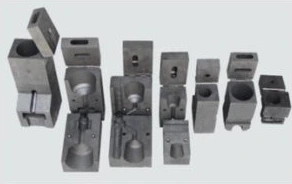
Exothermic welding is a simple, efficient, high-quality metal connection method, Exothermic welding by aluminothermic reaction generated by high temperature to make completely molten metal, in order to achieve high-quality welding effect. This reaction is conducted in the graphite mold of high-temperature resistance, exothermic reaction process takes only a few seconds.
The mold is designed specifically for a certain union depending on the elements to be Welding and the joint type required. We guarantee all types of joints, not only copper cable unions but also to Welding tapes, brass metallic pieces, stainless steel, steel ground rods covered with copper, etc. It is especially useful for joining dissimilar metals.
How it works
Exothermic Welding Process
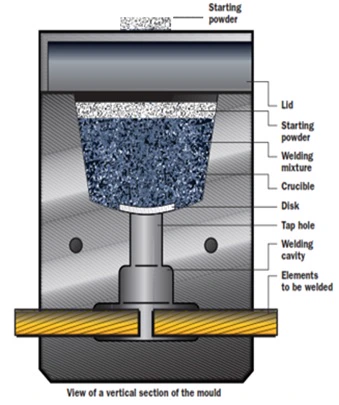
The process of Exothermic Welding is a method of making electrical connections of copper to copper or copper to steel in which no outside source of heat or power is required. In this process, a special Welding material is placed into a high-temperature resistant mold and ignited.
-
01
Ignite
The process of igniting the particles creates extremely high heat and molten metal (exothermic reaction) up to 1400 degree Celsius and produces a molten metal slag. This liquid copper metal flows into the Welding cavity, filling any available space and completes the Welding.
-
02
Cool
The Welding is then allowed to cool and solidify before it is removed from the mold. The mold is ready for the next Welding after a brief cleaning with a brush. This entire process takes only seconds to complete.
-
03
Connect
Exothermic Welding connections produce a permanent connection, superior in performance to any known mechanical or pressure type surface-to-surface contact connector. Because the connection produced is a molecular bond, an exothermic Welding connection will not loosen or increase in resistance over the lifetime of the installation.
-
04
Release
The Exothermic Welding System is a welding process that utilizes an exothermic reaction to permanently join metal connections. Exothermic Welding uses a light-weight, clamp-on graphite mold to safely position and contains any weld required. The exothermic reaction creates an intense miniature furnace with temperatures exceeding 2,500 °F, instantly producing molten metal which flows into the weld cavity, filling any available space. After waiting adequate time after the initial process, the mold can be released and the finished connection removed.
- Up to 1400 degree Celsius
- 1400°C
- Temperatures exceeding 2,500 °F
- 2,500°F
- No outside source of heat or power is required
- 0external power
Advantages